As I prepare for next month's talk at my local library, I am creating a short presentation to try to capture the DIY genealogical research journey I took to fill in the holes in Esther Miller's story. As I analyze how I went from 12 pages of hand-written memories to a published book, I realize the importance of the motivation of the journey.
There are at least five common motivations for embarking on a quest to document a person's history:
- In homage to an influential person in your life
- A partial story begging to be completed
- Curiosity about specific, ancestral roots
- The desire to preserve a story for future generations
- The dream of finding a story worthy of publishing
There may be more, but at every point in my own journey, I was motivated by at least one of these, usually a combination of many. The degree to which each motivation guided me shifted constantly as I progressed. In the end, without all five of these motivators, I may not have finished the project.
Esther had been gone for over five years so I would miss the prize of showing her the story I had written. There are holes in her life story that I can never fill - and those who know me know how I have to find all of the pieces to a puzzle. This was a trait which made it hard to come to terms with the fact that I had found all I was going to find.
I developed a love of history of all kinds from my father - broad history but also personal history. So my curiosity in finding my Confederate South ancestry and my Irish ancestors' ports of entry kept me knocking on virtual door after door.
But my main driver was to preserve Esther's story for future generations. Even if I failed to find all of the pieces of the puzzle or identify the ports of entry or show Esther what I had done with her life story, I had enough to go on to create a gift for my children and nieces and nephews, and those who come after them. What I didn't realize was how much value the completed story would have to my family of my own generation, my parents' generation, and my family's friends.
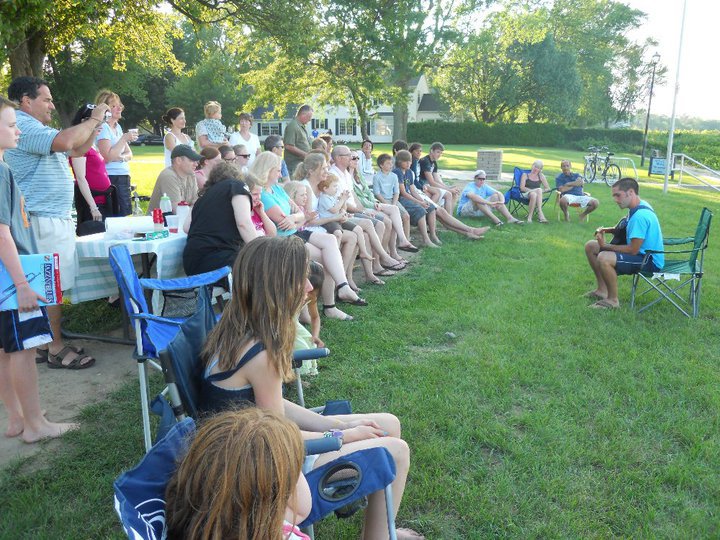
The book has become a catalyst for reminiscing and discovering stories that had been forgotten. It has enabled some stories to be relayed that would have otherwise been too hard to tell. And there are few healthier pastimes I know of than sitting with a group, from two to many, of people you love, talking about people you love who have passed away, their antics and experiences, and the imprint they left upon us.
I can't write enough about the gratitude I feel from my sisters and aunt, so I won't even try. But a nice way to express it was a call I got Friday evening from one of my mom's childhood friends who lives in Colorado. We had a long conversation about my mom and Esther and she recounted some priceless stories that didn't make it into the book; stories of women and children whose younger lives I can only imagine, but whose souls I was privy to and whose memories make me laugh and cry. We talked about how reading the book made her relive some wonderful childhood memories, relish some teen secrets, and reignite old feelings. At the end of the call, my mom's friend said "I just wanted to thank you for writing it. That's all. That's why I called. Just to thank you for writing it."
It won't make broad distribution, as I admittedly had dreamt, in reference to point 5 above. But the story is all that it needs to be. And the gratitude is all mine. I'm not sure if the book is the end of the journey. But the journey to find my family story is one of the best trips I ever took.
If you are in the Needham area in late January, come help me fill the room on Sunday, January 26th at 2:00pm at the Needham Free Public Library. Or tell a friend who is interested in DIY family genealogy. The program is called "Are You Ready to Find Your Family Story?" The discussion will not be about the book. It will be about the journey.
Twenty-seven years ago – anxious to try something new, but not really ready to leave – I made the decision to try a new city, thinking at the time that I could always move back home. One of many naïve views I’ve managed to prove wrong in the last 27 years, I still find myself, on many occasions, wishing I lived near my original family. Yet I remain extremely fortunate that the bond I have with my Midwest and DC family is incredibly strong despite the distances.
An article which appeared recently in The New York Times, The Stories That Bind Us, does a terrific job of illuminating an essential contributor to that family bond and the resulting resiliency: developing a strong family narrative. Amazing is the finding that children build self-esteem and resiliency simply by understanding that they are part of something bigger than themselves. As my children study the lives of explorers, celebrities, and famous people who left important marks on our world, it is really the stories like that of their great grandfather who came over from Ireland, alone, with just the shirt on his back at 16 years-old or the great-great-great grandfather who was a drummer boy in the Civil War that stir their underlying sense of self, mold their ideas of accomplishment, and fuel their internal motivation.
They don’t have to be heroic stories: Simple stories of regular lives, describing adversity overcome or the roller coaster ride of experiences, connected by some small, thin thread to who we are today. Those are the stories that bind us together.
No one likes a good story better than I. That must be why I enjoy my family full of story-tellers so much. I am usually in the audience, rarely the narrator. But I am so glad I sat down and documented my grandma’s story. I started it as a preservationist, but it grew into something more. Reading the NYT article gave me a sense of support, that others see the value in understanding our roots beyond knowing the branches of our family tree. The stories hanging from those branches are priceless in so many ways.
As we chart our own journeys, we find strength in the traditions of the past. We serve the menu that has come to represent a holiday over countless years. We bake the Irish soda bread using Nana's recipe. We gather as best we can, in honor of the family gatherings we've had since there was family. We learn and gather strength from one another, across generations and across state lines. We absorb new characters into the forward-moving narrative, through friendship, marriage, birth, and adoption. And we start traditions of our own, such as our family talent show, that find a comfortable, enduring place in the narrative.

I see the importance of the narrative from a business perspective as well. As I analyze new markets in my day job, I recognize the need to understand and appreciate the business’ core. As we step, tentatively or boldly, into new markets with new products, it is important to maintain an appreciation of our roots. Those origins are at the core of our success and new opportunities will only grow from lessons we have learned and merits we have earned along the way. The message we build for the new markets must be based on the narrative we have developed in getting to where we are.
But my favorite parts of the NYT article have to do with the family narrative. When my inner child needs a boost to keep the ‘happy’ in my family, I think I’ll watch my old home movies. Overcoming the styles of the 70s is hardship enough and a recurring subject of our family narrative. What is in your narrative? And have you told it to anyone lately?